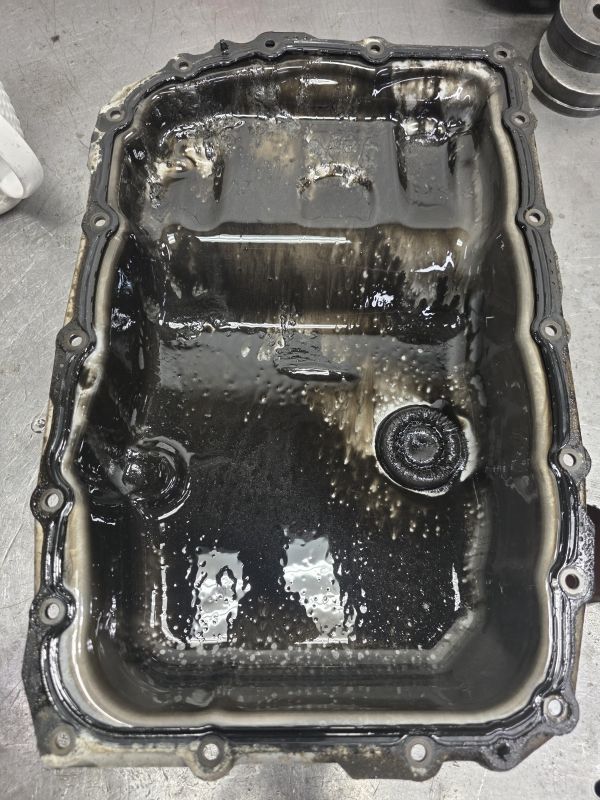
When a customer brought in their 2014 Dodge Grand Caravan for a few different concerns, cabin air filter condition wasn't the reason they came in. It became one of the most interesting parts of the visit anyway.
What We Found
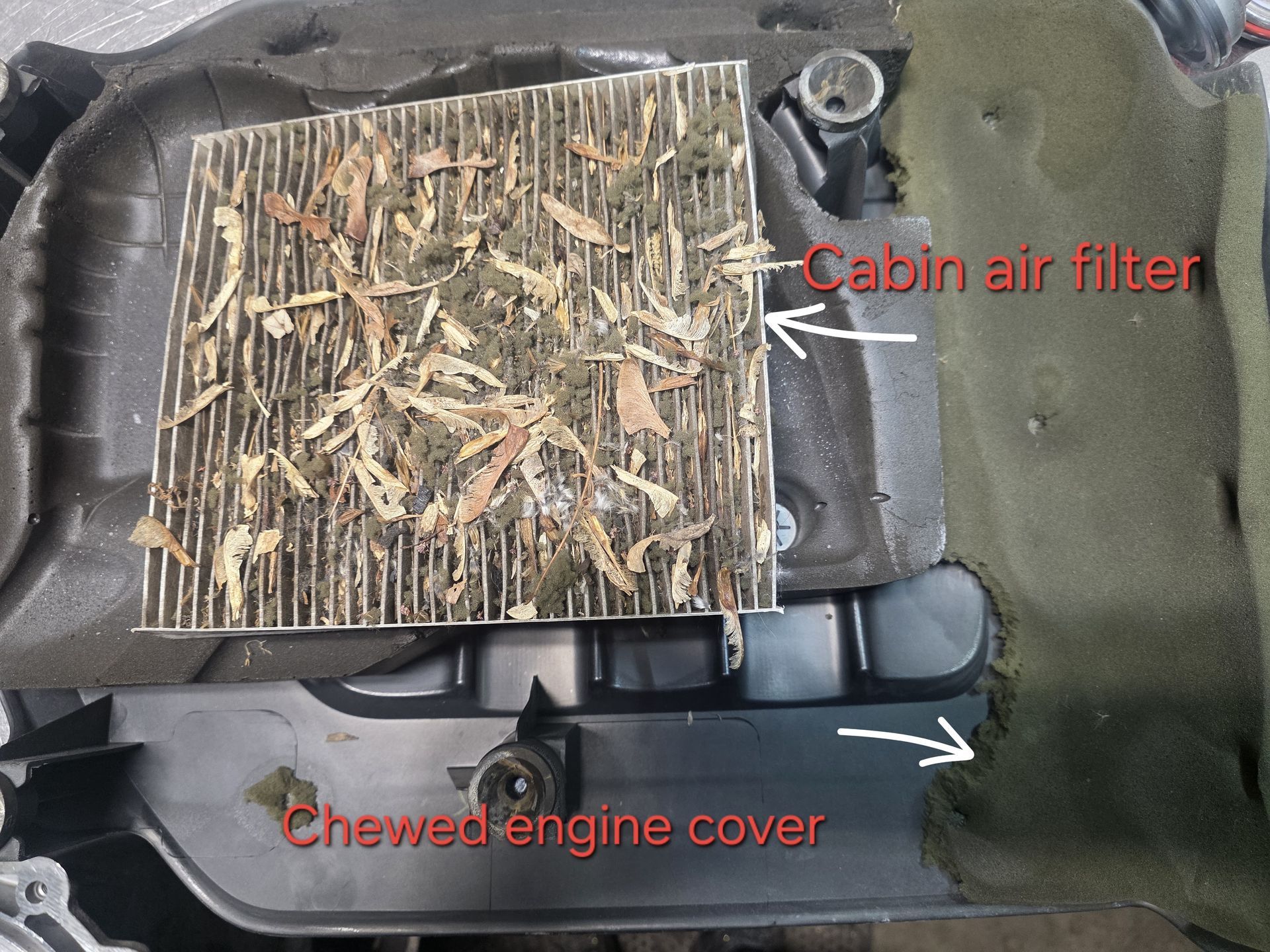
During a routine inspection, we checked both the engine air filter and the cabin air filter. The engine air filter was extremely dirty and restricted — not unusual for a vehicle with unclear maintenance history. The cabin air filter, though, told a stranger story.
Mixed in with the dirt and debris in the cabin filter was foam material that didn't belong there. At the same time, we noticed foam insulation missing from the engine cover nearby. Put those two things together, and the pattern was clear: something had been chewing insulation and dragging pieces of it into the HVAC intake system.
That's a classic sign of rodent activity.
The First Discovery
We pulled the cabin air filter and began cleaning out the blower motor and HVAC intake area. During that cleaning, we found confirmation of exactly what we suspected — the remains of a mouse, located in the glove box/HVAC intake area. We removed it, disposed of it properly, and installed a new cabin air filter.
Case closed, right? Not quite.
The Second Discovery
After the new filter went in, the HVAC blower worked normally at first — but within a short period of driving, an abnormal noise developed and airflow noticeably dropped off.
That's not what you want to hear right after a repair, so we went back in to find out why.
Pulling the filter again, we found a significant amount of additional nesting material and debris that had been lodged further up in the HVAC air inlet — between the fresh air intake and the filter location itself. It had simply taken a little time and airflow to work its way loose and pile up against the new filter, choking it off.
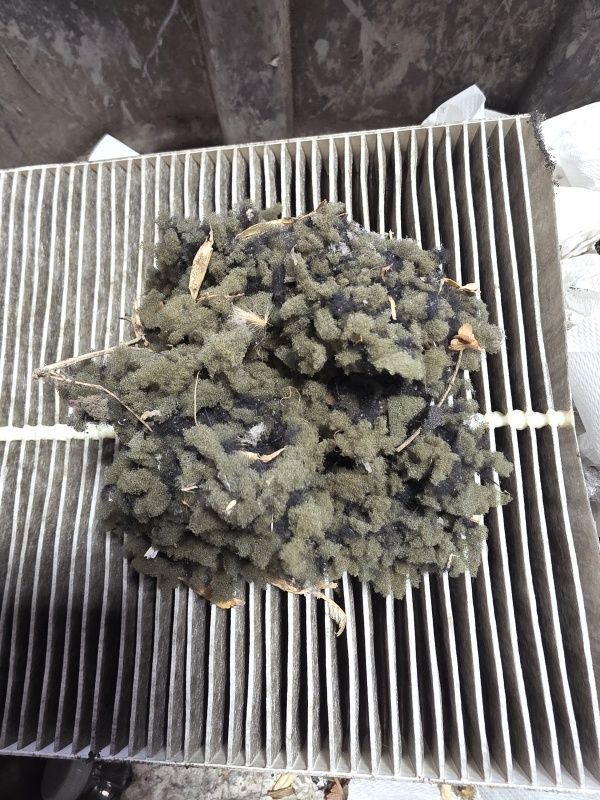
While cleaning that out, we found something else: a second mouse, a deceased baby mouse, further inside the HVAC intake system.
We removed it, thoroughly vacuumed out the remaining nesting material and debris, cleaned and reinstalled the cabin filter, and retested the system. This time, blower operation came back fully normal — proper airflow, no noise, no surprises.
Why This Happens
Vehicles that sit for periods of time — especially in garages, near wooded areas, or through colder months — are attractive shelter for rodents. Cabin air intakes, in particular, are a common entry point, since they offer a way into a warm, enclosed space with soft insulation material nearby that's easy to shred into nesting material.
The tricky part, as this case shows, is that rodent damage isn't always a one-and-done fix. Nesting material can be tucked further into the system than what's immediately visible, and it doesn't always show up until airflow starts moving it around again.
Signs Your Vehicle Might Have Unwanted Guests
- Musty or unusual odors from the vents
- Reduced airflow from the HVAC system
- Unusual noises from the blower motor
- Visible chewing or missing insulation material under the hood
- A cabin air filter that looks unusually dirty or contains debris that isn't just road dust
What to Do About It
If you notice any of these signs — or if your vehicle sits for extended periods without being driven — it's worth having your cabin air filter and HVAC intake inspected. Catching it early can mean a straightforward filter replacement instead of a more involved cleaning like the one described here.
At Lee Myles AutoCare + Transmissions in Hazlet, we don't stop at "looks fine" the first time something seems resolved — as this case shows, sometimes the full picture only reveals itself once you dig a little deeper.
Lee Myles AutoCare + Transmissions, 3244 State Highway 35, Hazlet, NJ 07730